
What Equipment Are In An Edge Computing Server Cabinet
Introduction
Functionally, the technology and equipment behind edge computing is actually quite similar to the ones used in cloud computing. What differs is the structure and purpose each computing model is designed for. For cloud and edge computing, the former is meant to deliver computing power over the internet while the latter is meant to offer computing power directly (or as close to the end user as possible). Two different models, same function.

However, what does differ between the two in terms of technology and equipment is how they are operated and built. In traditionally large data centers that host cloud services (think AWS, Google Cloud, Microsoft Azure), these infrastructures will contain rows and rows of high density server cabinets and every supporting cooling system or whatnot. These massive centers are able to do this because of a couple of reasons.

One, they have access to a lot more space. This means they can design and construct their data centers with more room to expand. Of course, it’s not to say space isn’t being used optimally, but the nature of having more space means you have more freedom in choice. Two, these cloud hosts need to have the capacity to provide a lot of processing power. Because their service is to provide computing to their clients, they’ll want to maximize all their equipment to offer peak performance.
Edge computing, on the other hand, doesn't have the same conditions. Edge computing processes are limited in space but at the same time don’t usually require the same level of processing that cloud computing provides. Instead of rows and rows of server cabinets (where most of the processing occurs) they may have one row… or a single cabinet.

What’s in an edge computing server cabinet?
The most important thing to consider about a server cabinet, or really any equipment, for edge computing is how you would optimize both space and performance. After all, if you are operating and processing your data from an edge data center or a smaller edge server, they will typically be smaller in size compared to their counterparts. In such a compact environment, your equipment must be able to deliver maximum efficiency with minimal footprint.
So what kind of networking equipment will you find in a server cabinet? For starters they are:
- Servers
- Patch panels
- Switches
- Routers
- Power supply
Server Cabinets
Server cabinets can come in many different sizes, but most commonly they will come in a 48U (where 1U = 1.75-inches, so 48U = 7 feet) configuration. This is because this height allows operators to expand their network but also easily access their equipment during maintenance. Of course, in small enclosures like a telecom closet or a hanging 5G station, server cabinets may come in a smaller configuration such as a 22U.

Servers
These are specialized computers designed to manage network resources, process data, and host applications. In edge computing, they will be optimized for local data processing and high-performance. In some cases, they may even be ruggedized to be able to withstand hard environmental conditions.
Patch Panels
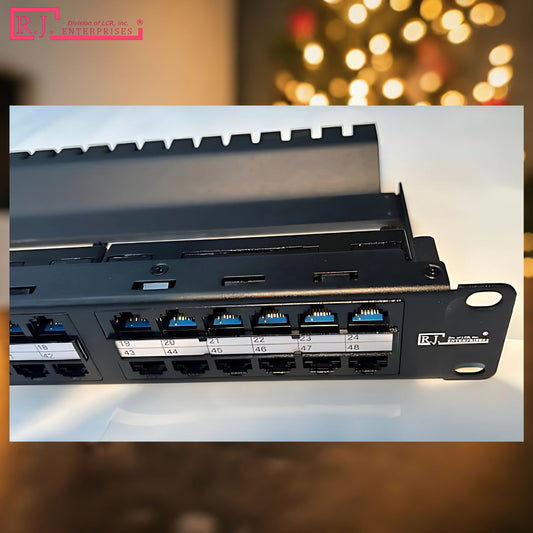
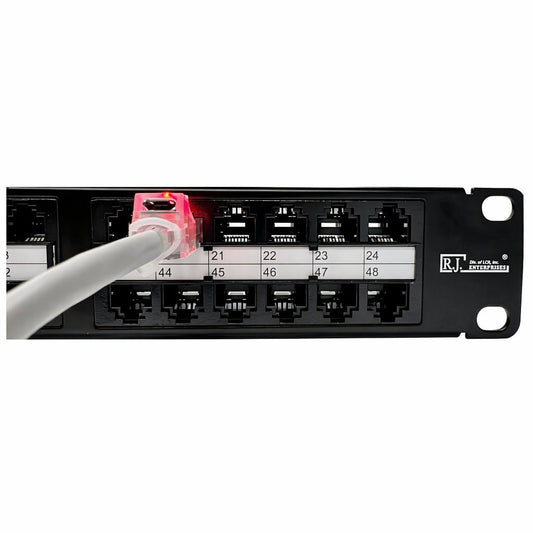
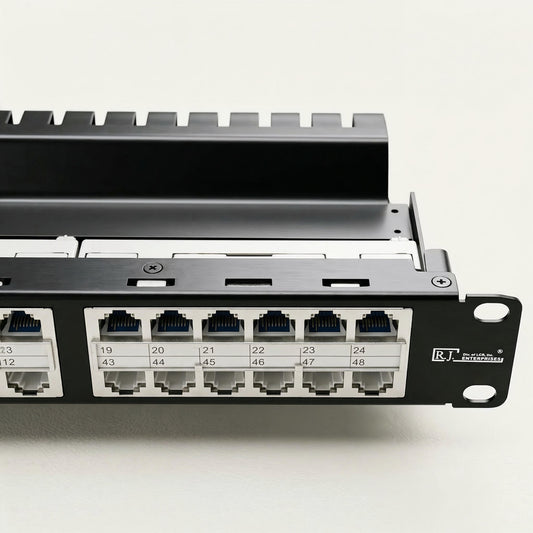
Patch panels are specialized networking equipment that offers protection and structured cabling for your network connections. They help cut down maintenance time and costs in the long term by allowing you to easily document your cables.
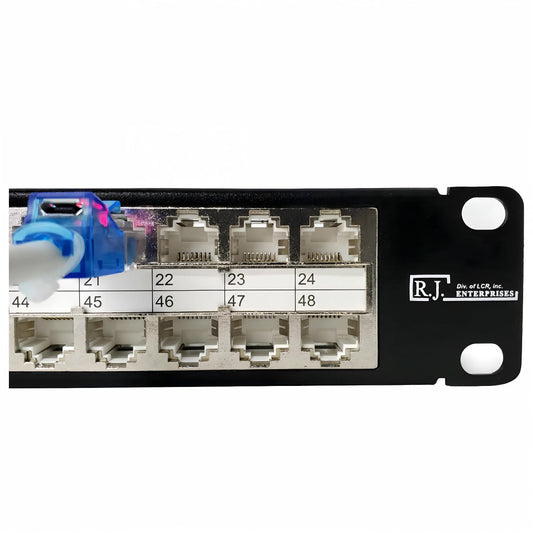
In our case here at RJ Enterprises, our patch panels include a high-density variation — featuring 48 ports within 1U. This variation is particularly useful for edge computing because it emphasizes on maximizing your space-usage without losing performance. Being able to support speeds of up to 10 Gbps, the high density patch panels are able to perform qualitatively even in the most demanding circumstances.

There are also other factors to consider when deploying patch panels for your edge computing server. Think about future upgrades and maintenance. In edge, you are operating your servers closer to the user and may need to regularly replace connections or apply a quick fix. Instead of using a punch down patch panel, we highly recommend you consider a tool-less one where you don’t need to spend additional time making sure your cables are correctly punched down into their corresponding colors.

Another point of concern is signal interference, whether it’s in the form of alien crosstalk or EMI. Especially in a tight and compact environment, signal interference can be especially harmful to your servers performance. For edge, this is particularly significant because the whole reason behind deploying edge computing is to have your data processed in real-time (or near instantaneously). Using shielding technology in your patch panel will help mitigate this problem.
Switches
A switch is a networking device used to connect multiple devices such as servers, computers, and access points into a local area network (LAN). Unlike hubs, switches efficiently direct data only to the intended recipient rather than broadcasting it to all connected devices, reducing network congestion and improving performance. There are different types of switches suited for various networking needs. Unmanaged switches are simple plug-and-play devices with no configuration options, ideal for small networks. In contrast, managed switches offer advanced features like VLAN support, traffic monitoring, and security settings. Layer 2 switches operate at the Data Link Layer, forwarding packets based on MAC addresses, while Layer 3 switches function like routers by enabling communication between different VLANs. Additionally, Power over Ethernet (PoE) switches provide both power and data over Ethernet cables, making them useful for IP cameras, VoIP phones, and wireless access points.

Switches are crucial in server racks for optimizing network traffic, improving scalability, and ensuring security. They help reduce congestion by intelligently directing data, allowing businesses to expand their network as needed. Managed switches, in particular, provide greater control with features like network monitoring and access management. Additionally, they contribute to redundancy and reliability, ensuring stable and uninterrupted connectivity for critical business operations.
When selecting switches for edge computing, several key factors must be considered to ensure reliable and efficient network performance. Edge computing requires low latency, high bandwidth connectivity to process data closer to the source, reducing the need for long distance data transmission. Switches deployed in edge environments must support high speed data transfer with features like Gigabit or 10G Ethernet ports, ensuring fast and uninterrupted connectivity for IoT devices, sensors, and local processing units. Additionally, Power over Ethernet (PoE) capabilities can be beneficial for powering remote devices, such as cameras and access points, without requiring separate power sources.

Another critical aspect of edge computing switches is their durability and environmental resistance. Unlike traditional data center switches, edge devices are often deployed in harsh conditions, such as industrial sites, outdoor locations, or remote facilities. Industrial-grade switches with ruggedized enclosures, extended temperature tolerance, and dust or moisture resistance are essential for ensuring long-term reliability in these environments. Furthermore, edge networks require strong security features to protect against cyber threats, as they often operate outside traditional centralized data centers. Managed switches with advanced security protocols, VLAN support, access control lists (ACLs), and encryption capabilities help safeguard sensitive data and prevent unauthorized access.
Routers
When selecting routers for edge computing, several key considerations must be addressed to ensure optimal performance, security, and reliability. Since edge computing processes data closer to the source rather than in a centralized data center, routers must be capable of handling high-speed, low-latency communication to support real-time applications. They should offer multi-Gigabit throughput, low packet loss, and efficient traffic prioritization through features like Quality of Service (QoS) and edge-specific traffic management protocols. Additionally, support for dual WAN or 5G/LTE connectivity can enhance network redundancy, ensuring continuous operation even in case of a primary connection failure.

Another critical factor is the ruggedness and durability of edge computing routers, as they are often deployed in harsh environments, such as industrial sites, outdoor locations, or remote facilities. Industrial-grade routers designed to withstand extreme temperatures, humidity, dust, and vibrations are essential for reliable long-term operation. Additionally, power efficiency and PoE support are important, especially in remote edge locations where power supply may be limited or inconsistent.
Power Supply
Server cabinets do not typically come with a built-in power supply, but they house Power Distribution Units (PDUs) or Uninterruptible Power Supplies (UPSs) to manage power distribution. PDUs provide organized power distribution to servers, switches, and other rack-mounted equipment, while UPSs offer backup power in case of outages. Additionally, intelligent or metered PDUs help monitor power usage and prevent overloads, which is crucial for data center efficiency.
In edge computing environments, where space is often limited, power management must be compact, efficient, and scalable. Unlike traditional data centers, edge locations may be in small enclosures, remote facilities, or industrial environments, requiring specialized power solutions. Compact rack-mount PDUs and UPSs are essential to maximize space utilization without compromising power reliability.
Another major consideration is power efficiency. Since edge locations may have limited energy availability, power supplies should be energy-efficient and optimized for lower power consumption. Lithium-ion UPS systems are often preferred over traditional lead-acid batteries due to their longer lifespan, smaller size, and higher efficiency. DC power distribution is another option that can reduce energy loss, improve efficiency, and minimize space requirements.
Redundancy and failover mechanisms are also crucial for edge power systems. Deploying dual-power PDUs, automatic transfer switches (ATS), and redundant UPS configurations ensures continued operation even in case of a power failure. Additionally, remote monitoring and management capabilities are vital for edge locations where on-site IT support is limited. Smart PDUs and cloud-managed power solutions allow teams to monitor power usage, receive alerts, and remotely control power cycling for troubleshooting.