
What are Shielded vs Unshielded Ethernet Cables?
Share
When building or upgrading a network, choosing the right Ethernet cable is crucial — not just in terms of speed and category (Cat5e, Cat6, Cat6A), but also in how the cable is constructed. One of the most common decisions installers and IT pros face is whether to use shielded or unshielded Ethernet cables.
So what's the difference, and which one should you use? Let's break it down.
What is an Unshielded Ethernet Cable (UTP)?
Unshielded cables — commonly labeled UTP (Unshielded Twisted Pair) — are the most widely used type of Ethernet cable for general networking installs. They rely on the natural twist of the wire pairs inside the cable to cancel out interference.
Benefits of UTP Cables
- Flexible and easy to install: Lightweight and easy to terminate or route through walls and ceilings.
- Cost-effective: Less material and simpler manufacturing make them more affordable.
- Sufficient for low-interference environments: Ideal for typical home networks or offices without heavy electrical interference.
What is a Shielded Ethernet Cable (STP, FTP, S/FTP)?
Shielded cables are labeled STP (Shielded Twisted Pair), FTP (Foiled Twisted Pair), or S/FTP (Shielded and Foiled Twisted Pair). They include an extra layer (or layers) of shielding around each pair or around the overall cable.
This shielding helps reduce electromagnetic interference (EMI) and crosstalk, which can cause data corruption or performance issues in high-noise environments.
Benefits of Shielded Cables
- Improved performance in noisy environments: Especially near fluorescent lights, industrial equipment, or large motors.
- Better crosstalk protection: Great for high-frequency applications like Cat6A and 10G networks.
- Required in many data centers: Shielding helps ensure signal integrity over long distances and protects data and signals from EMI and radio frequency interference (RFI).
Installation Tips for Shielded Ethernet Cables
If you're planning to use shielded cable, keep these in mind:
- Grounding is required. Shielded cables must be properly grounded to function correctly. Without grounding, the shield may actually increase interference.
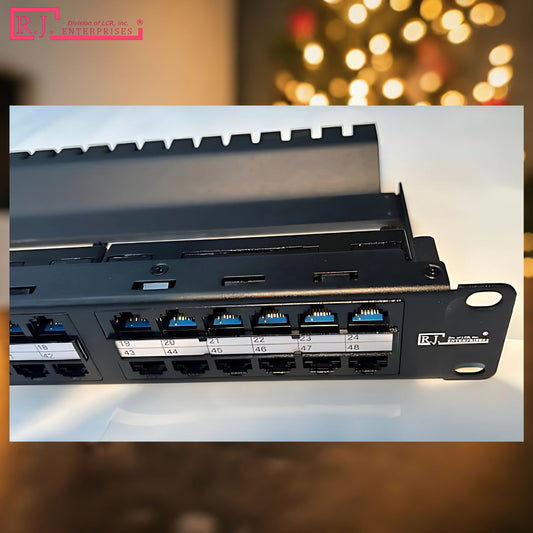
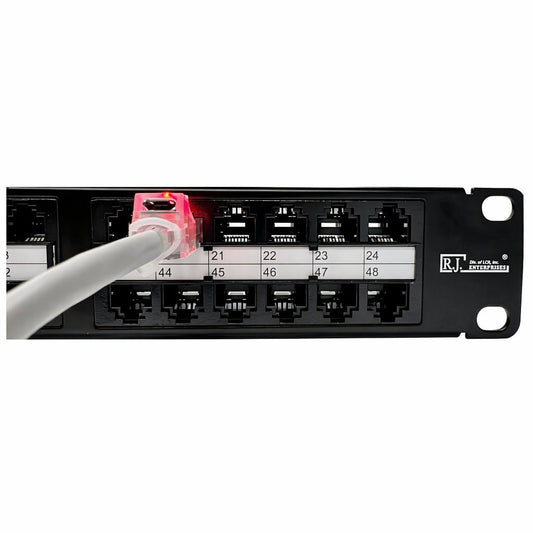
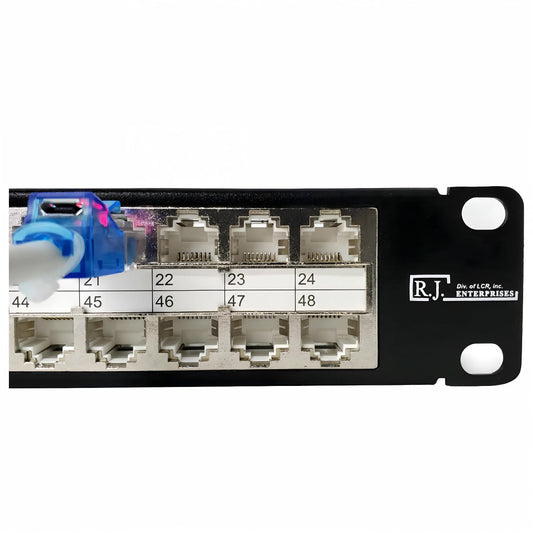
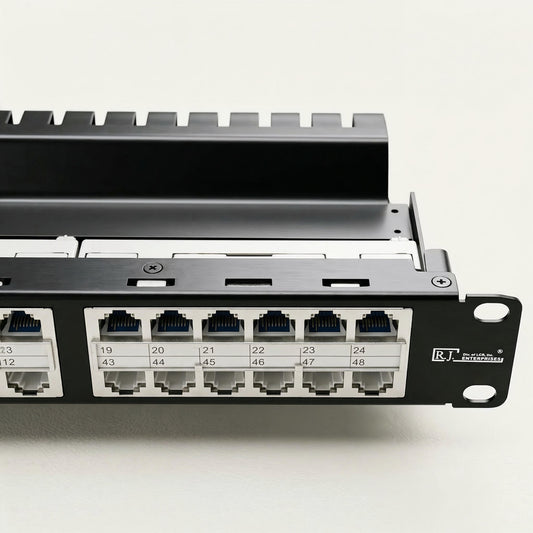
- Use shielded connectors and jacks. Your RJ45 connectors, keystone jacks, and patch panels must also be shielded.
- Avoid mixing cable types. If part of your run is shielded and another part isn't, you won't get the full benefit.
So… Which One Should You Use?
- Use unshielded (UTP) for most home and light commercial installations. It's cost-effective, easier to work with, and performs well in low-interference environments.
- Use shielded in high-EMI areas, industrial environments, or high-performance 10G+ networks where signal integrity is critical.
When in doubt, think about the environment first. If you're installing nearby machines, HVAC units, or fluorescent lighting, shielded cables are worth the extra investment.
Related: Shielded vs Unshielded Keystone Jacks
The cable is only half the equation. If you choose shielded cable but pair it with unshielded keystone jacks, you lose the benefit. See our companion guide: Shielded vs Unshielded Keystone Jacks: When You Actually Need STP.
Final Thoughts
Choosing between shielded and unshielded Ethernet cable doesn't have to be complicated. If you know your installation environment and performance requirements, the right choice becomes clear.
Need help deciding? At R.J. Enterprises, we offer a full range of patch panels and keystone jacks — both shielded and unshielded — to fit your install. 40+ years of TIA-certified manufacturing in Long Island City, NY.